Shimano recently updated one of its most widespread and highly reputed groups among cyclists around the world. It was only a matter of time: the 105 now adopts the Di2 electronic technology with semi-wireless operation. As you know, it's the same system already used by higher-end groups, such as the Dura-Ace or Ultegra.
👉 The ultimate guide to Shimano road bike groupsets
We're talking about a type of shifting that eliminates cables between the handlebar shifter and the battery (integrated into the seatpost or seat tube), but keeps the cables between the battery and derailleurs to achieve more precise shifting and a stable connection that prevents failures. The arrival of this group aims to make electronic shifting technology more accessible to more amateur cyclists. However, the final price of the components is higher than in the previous mechanical version. The retail price of this new 105 is around, depending on the components chosen, 1,800 euros. With this renewed product, Shimano positions itself in the market with a mid-range alternative to the SRAM AXS wireless groups and takes another step forward in the sector of road bikes with electronic shifting
.
Shimano 105 Di2: the key points
These are the 5 main features of the new electronic transmission group:
1. Goodbye to the mechanical group. From now on, the Shimano 105 will only be available in this new electronic and semi-wireless version. The Tiagra group remains as the reference mechanical group.
2. Semi-wireless Di2 technology. It's the same as in the higher-end Dura-Ace and Ultegra Di2 groups. The shifters have no cables, but the derailleurs are still operated via a cable connected to the battery (integrated inside the seat tube).
3. 12-speed cassette. The 105, like the higher-end road groups, adopts the 12-speed cassette. The double chainring option is maintained.
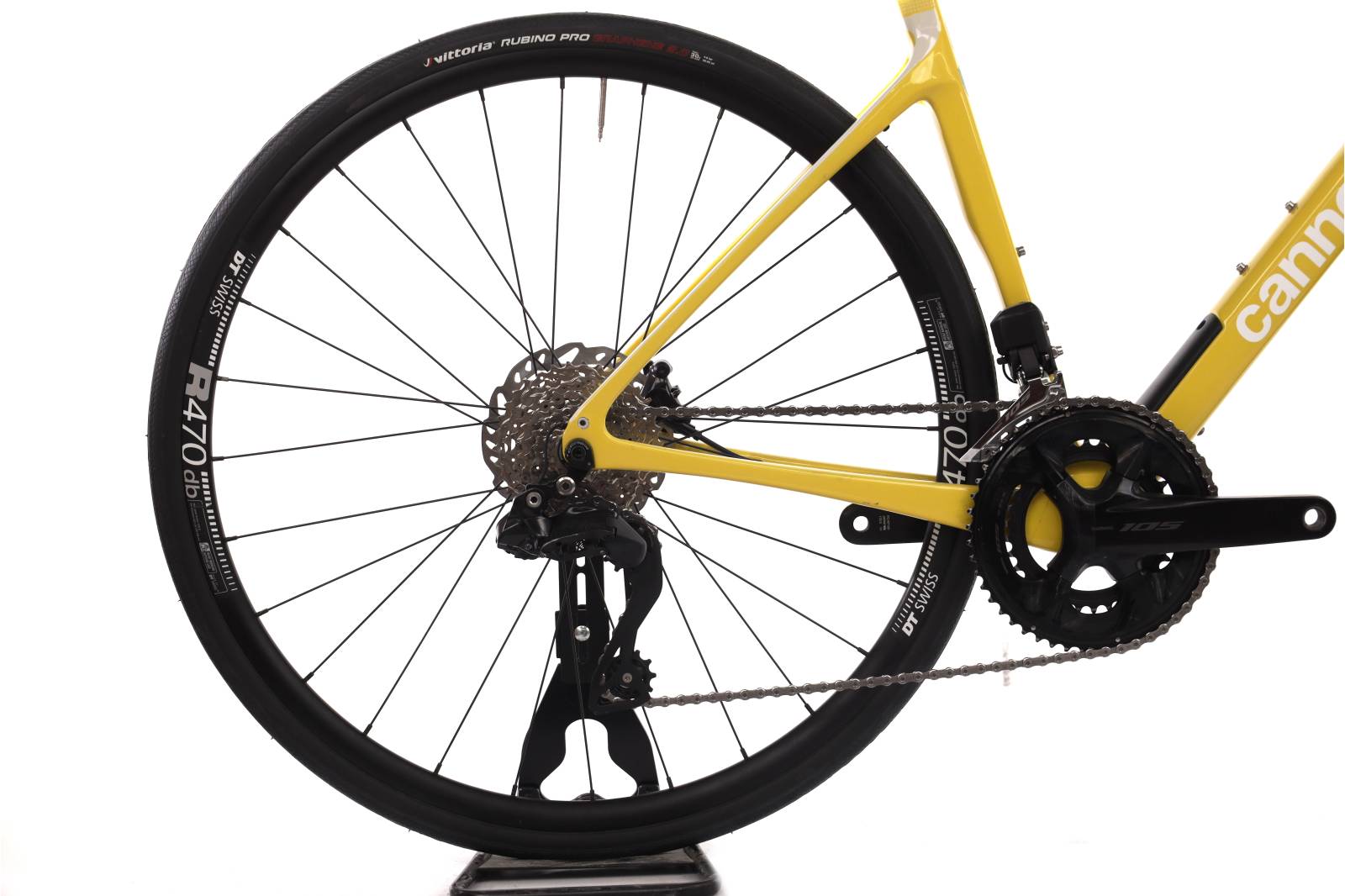
4. Goodbye to rim brakes. The new group also does away with rim brakes. There will only be hydraulic disc versions.
5. Brand new carbon wheel model. Shimano aims to popularize wheels made of this material, and offers them ready to be set up tubeless. Considering the above, an inevitable question arises: What is the main difference between a 105 Di2 group and an Ultegra or Dura-Ace Di2 group? The difference lies in the weight of the components. Compared to the Ultegra Di2, for example, the complete group is 174 grams heavier.
The new Shimano 105 Di2 piece by piece
Next, let's take a detailed look at each of the components of the Shimano 105 Di2.
Cassette
We begin with the unprecedented 12-speed cassette. It keeps the small 11-tooth cog and is also compatible with 11-speed wheel hubs. Therefore, even if you have an 11-speed Shimano cassette, you can install the 12-speed one without having to change the hub or the wheel. The available ranges are 11-34 and 11-36 teeth, very suitable for touring cyclists and intermediate-level riders.
Rear derailleur
Its arm and cage combine materials such as aluminum and steel. It adopts Shadow shifting technology with integrated D-Fly connectivity. This is what allows connection with your smartphone or compatible cycle computer.
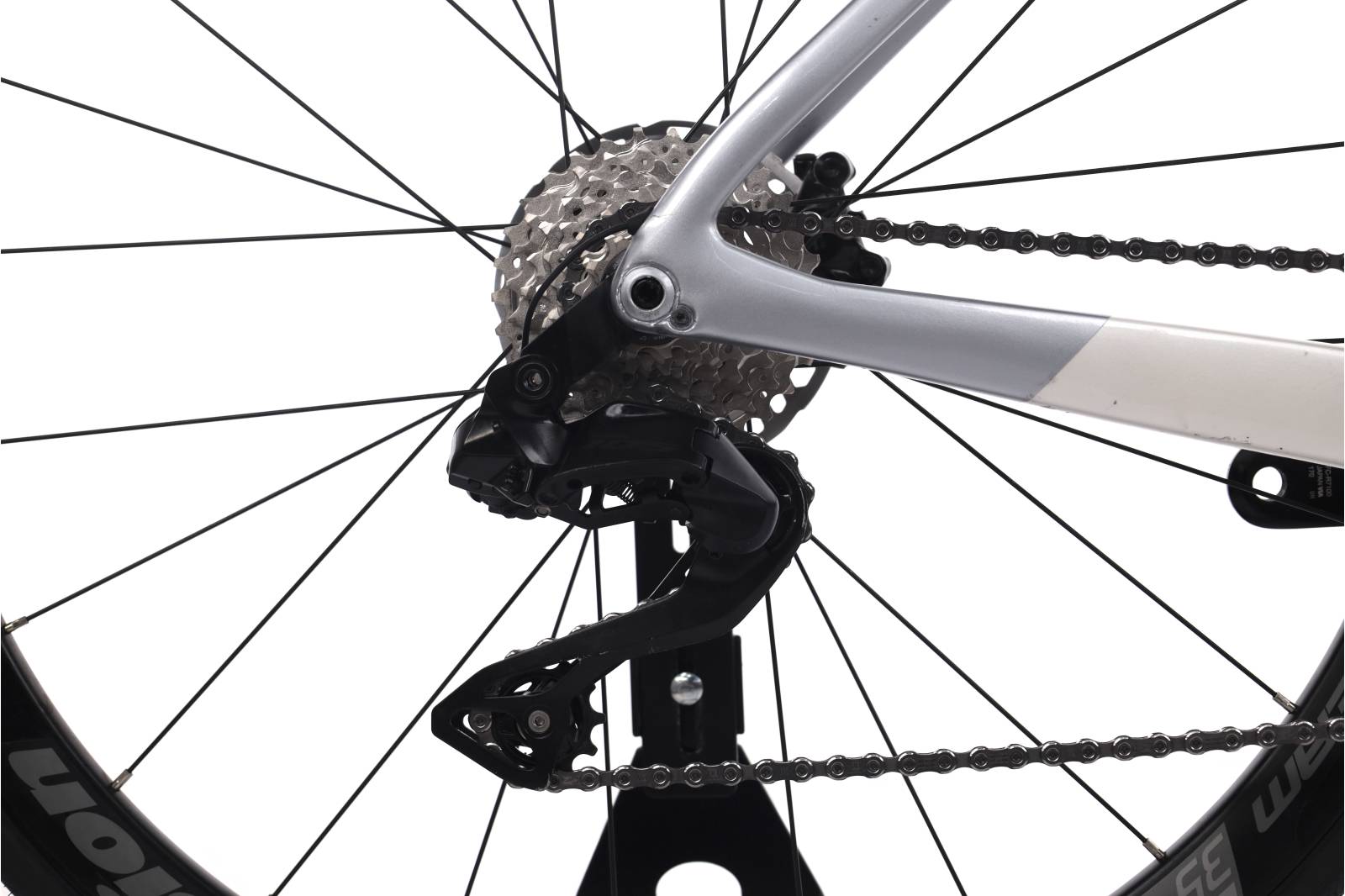
The derailleur has an internal motor connected to the external and integrated seat tube battery. It has been optimized only for 12-speed shifting and the pulleys have 11 teeth. According to Shimano data, the electronic shifting reduces the time needed to change gears by more than 50% compared to a mechanical shift.
Front derailleur
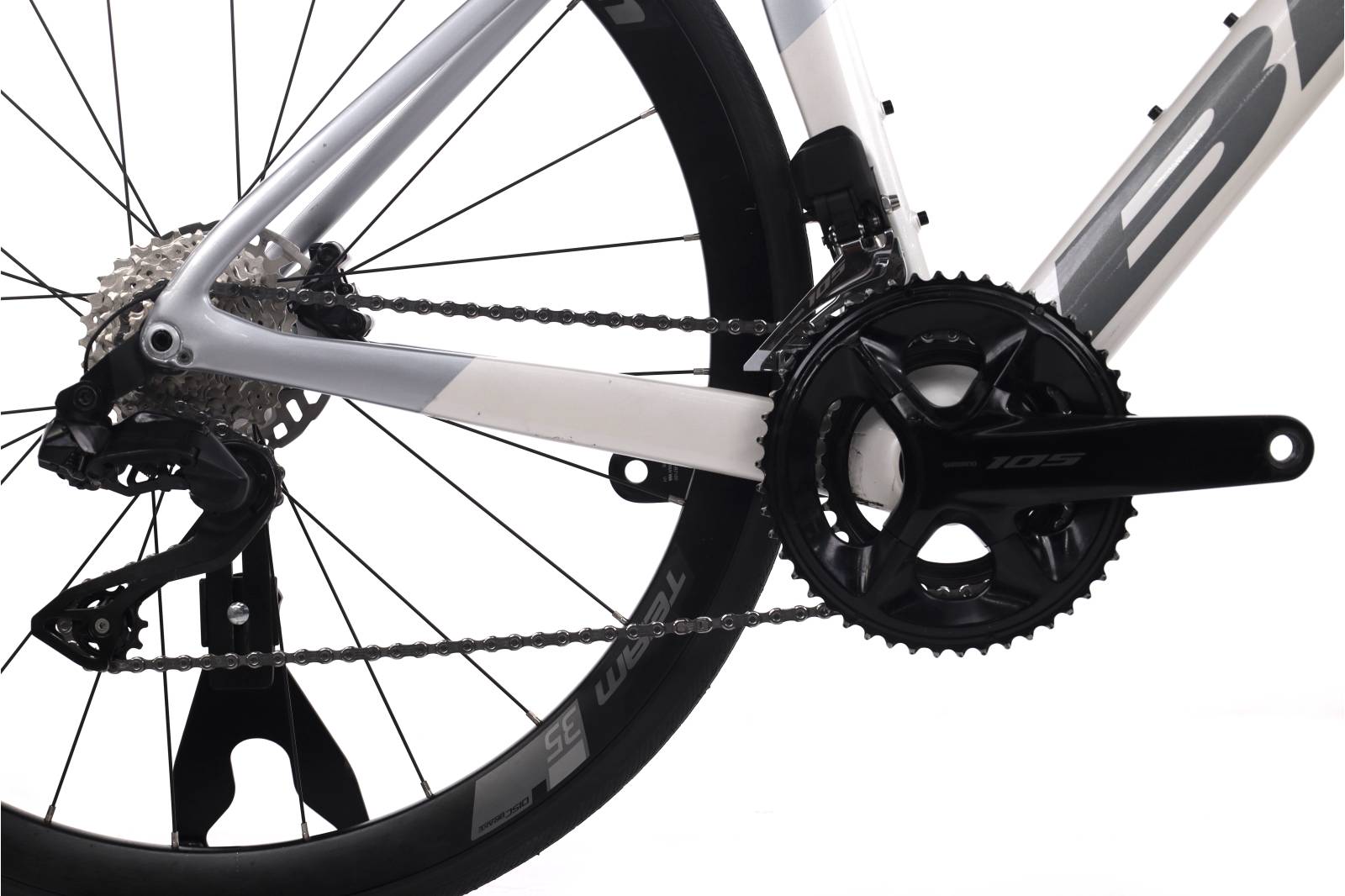
The front derailleur has the same cable connectivity with the battery. The chain guide is made of steel with an anti-corrosion chrome finish and has been optimized only for 12 speeds. The battery (SD-300) is the same as that of the Shimano Dura-Ace and Ultegra Di2, with an estimated range of 1,000 km per charge cycle.
Chain
Shimano uses the same chain as in the SLX MTB group. Its strength and compatibility with 12-speed drivetrains have led Shimano to offer it in this Road group.
Crankset/chainrings
It is offered in two versions. A one-piece crankset/chainring set with Hollowtech II hollow-forged aluminum, with 50/34 and 52/36 chainring options, and another simpler two-piece version with aluminum arms and a 50/34 option.
Shifters
The shift levers are, for the first time, wireless. They feature newly designed Dual Control levers for better ergonomics and aerodynamics. For wireless operation, a space has been provided to house a coin-type battery that lasts between a year and a half and two years, depending on use.
Other components: brakes and wheels
The new Shimano 105 group dispenses with a new version of rim brakes. It relies entirely on a new model of hydraulic disc brakes and improved lever ergonomics. On the other hand, the brake calipers increase their internal space by 10% compared to the previous generation, to install and align the pads more easily. As for the wheels, a new carbon fiber range debuts, dispensing with the aluminum wheels previously used by the group. The new 105 rims have two versions according to the profile: the C32 (32 mm profile) and the C46, more rolling (46 mm profile). The weight of the first wheelset is 1,504 grams, while the C46 rises to 1,612 g. The rear is also compatible with 11-speed cassettes and the new 12-speed ones.
Adjustments and customization
The new Shimano 105 Di2 also inherits adjustment and customization aspects of the shifting. The battery status can be checked via a small LED light integrated into the derailleurs, which turns from green to red to indicate a low battery state.
On the other hand, it is possible to connect the transmission via Bluetooth with Shimano's e-Tube mobile app. With it, you can configure the transmission to the cyclist's preference. It is possible to adjust the shifting speed, modify the number of shifts per press, and use the semi-synchronized or full synchronized modes. In addition, the 105 Di2 can also be paired with almost all bike computers from other brands, such as Garmin or Wahoo. This feature allows you to monitor gear selection or display the battery status from the device's screen.
 Tuvalum Team